


Trigger Shots 101: Timing, Side Effects & Common Questions
If you’re preparing for an egg retrieval, intrauterine insemination (IUI), or timed‑intercourse cycle, your care team at Indiana Fertility Institute (IFI) may prescribe a “trigger shot.” This medication is a key milestone in your treatment plan—and one of the most time‑sensitive. Understanding how it works, when to take it, and what to expect can help you feel confident and prepared.
This guide breaks down everything patients typically want to know about trigger shots, including timing, purpose, common symptoms, and what to do if something doesn’t go according to plan.
What Is a Trigger Shot?
A trigger shot is a medication—usually containing hCG (human chorionic gonadotropin) or a GnRH agonist like Lupron®—that helps your body complete the final stage of egg maturation.
In a natural cycle, your body releases an LH (Luteinizing Hormone) surge before ovulation. In a medicated cycle, the trigger shot:
-
Mimics or initiates that LH surge
-
Ensures eggs reach full maturity
-
Allows your care team to precisely time your egg retrieval, IUI, or timed intercourse
Different patients may use different trigger medications depending on their diagnosis, ovarian response, and lab protocols. Your IFI provider will work with you to choose the option that best supports your treatment plan.
Why Timing Matters So Much
Unlike many other fertility medications—where a slightly late dose may not be critical—the trigger shot has a very precise window for the best results.
For IVF (Egg Retrieval)
-
Egg retrieval is scheduled ~34–36 hours after your trigger shot.
-
If you take it too early, you risk ovulation occurring before the retrieval.
-
If you take it too late, your eggs may not be fully mature during the retrieval.
For IUI or Timed Intercourse
-
Ovulation typically occurs ~36 hours after the trigger.
-
Your IFI care team will schedule your IUI or recommend intercourse accordingly.
This is why many patients:
-
Set multiple alarms
-
Have a partner or friend double‑check the time
-
Lay out supplies an hour beforehand
Your timing instructions are individualized—always follow the exact timing IFI gives you, even if it differs from what you’ve heard from others.
How Trigger Shots Are Given
Depending on your medication, your trigger may be:
-
Subcutaneous (just under the skin) — e.g., Novarel®, Ovidrel®
-
Intramuscular (into the muscle) — e.g., hCG powder mixed with diluent
-
A Lupron-only or “dual trigger” — often used to reduce risk of ovarian hyperstimulation syndrome (OHSS)
Your care team will review mixing instructions (if needed) and the correct injection technique prior to your trigger day.
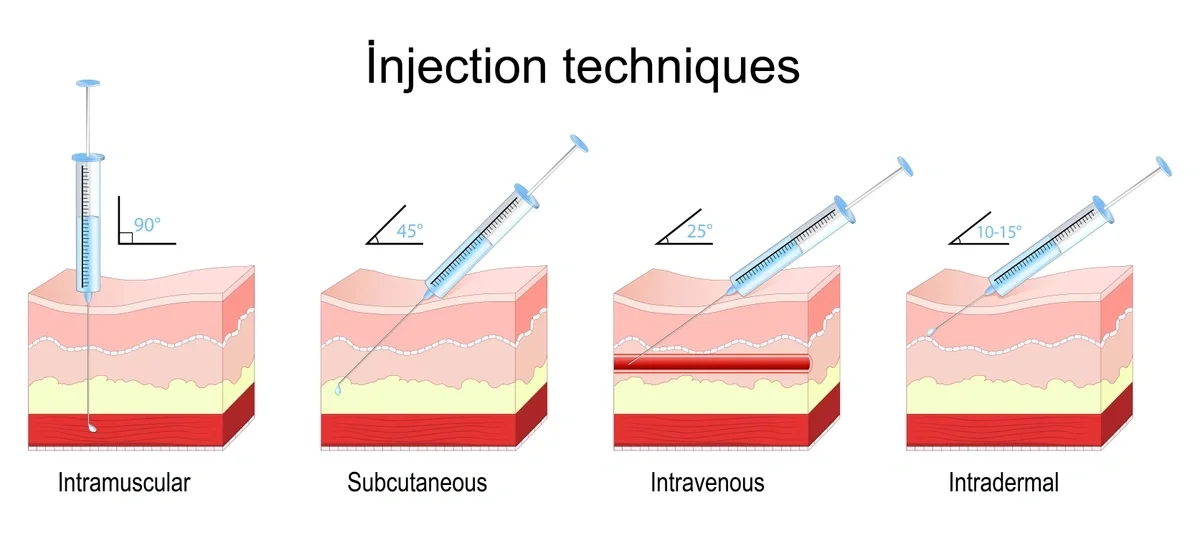
Illustration of injection techniques
Common Side Effects
Most side effects are mild and short‑lived. Patients commonly report:
Physical Symptoms
-
Bloating or abdominal pressure
-
Mild cramping
-
Breast tenderness
-
Fatigue
-
Injection‑site soreness or redness
Emotional Symptoms
-
Mood swings
-
Anxiety or restlessness
-
Trouble sleeping the night of the trigger (from excitement or nerves)
It’s important to know that trigger shots—especially hCG—can cause a false‑positive pregnancy test for up to 10–12 days. Always follow IFI’s instructions about when to test.
Frequently Asked Questions
1. What if I’m late taking my trigger shot?
Call IFI immediately. A small delay may be manageable, but timing is critical for your retrieval or IUI schedule.
2. What if I accidentally inject the wrong medication or wrong dose?
Again: call IFI right away. Your team will assess the situation and decide on next steps.
3. Can I “feel” the trigger working?
Not really. Any cramping or pressure is generally from your stimulated ovaries—not the trigger itself.
4. Will I ovulate early?
Early ovulation is uncommon when carefully monitored, but it is possible. Call IFI if you experience:
-
Sudden sharp pelvic pain
-
New, significant fluid‑like discharge
-
Sudden decrease in bloating
5. Can the side effects predict how many eggs I’ll get?
No. Symptoms (or lack of symptoms) don’t indicate egg count or quality.
6. Should I avoid certain activities after the trigger?
Yes. Because your ovaries are enlarged:
-
Avoid high‑impact exercise
-
Avoid twisting/stretching movements
-
Keep hydration steady
-
Rest, but light walking is okay
Your care team will provide personalized precautions based on your cycle.
What Happens After the Trigger Shot?
The next 24–36 hours often feel exciting—and nerve‑wracking. Here's what comes next:
For IVF Cycles
-
You’ll arrive at IFI for your scheduled retrieval.
-
You’ll receive sedation, and eggs will be collected gently via ultrasound‑guided aspiration.
-
Your partner or donor (if applicable) provides a sperm sample.
-
The lab takes over from there—fertilization, embryo culture, and next‑day updates.
For IUI & Timed Intercourse Cycles
-
IFI will schedule your IUI or guide you on when to have intercourse.
-
Ovulation typically follows ~36 hours after your trigger.
Then begins the two‑week wait!
When to Call IFI
Please contact your care team if you experience:
-
Severe abdominal pain
-
Rapidly worsening bloating
-
Difficulty breathing
-
Persistent nausea or vomiting
-
Heavy vaginal bleeding
-
A missed or incorrectly timed dose
Your care team is available to help you through every step.
Final Thoughts
Your trigger shot marks the transition from preparation to action—and it’s one of the most significant moments in a fertility cycle. While the timing can feel intimidating, you’re never doing it alone. IFI’s nurses and physicians are here to guide you, support you, and make sure you understand exactly what to do and when to do it.