


IUI vs. IVF: When Is Each Treatment Recommended?
When you're navigating fertility care, one of the most common—and understandable—questions is: "Do I need IVF, or could IUI work for me?"
Both IUI (intrauterine insemination) and IVF (in vitro fertilization) are effective fertility treatments, but they serve different purposes depending on your medical history, diagnosis, age, and goals. At Indiana Fertility Institute (IFI), treatment decisions are never one-size-fits-all—your care team focuses on finding the right approach for you, at the right time.
This guide breaks down the difference between IUI and IVF, when each is typically recommended, what it means if IVF is suggested right away, and how to know when it's time to move from IUI to IVF.
What Is IUI?
IUI is often one of the first treatment steps in fertility care. During an IUI cycle, sperm is carefully prepared and placed directly into the uterus around the time of ovulation, increasing the chances of fertilization. IUI may be done in a natural cycle or with ovulation-inducing medications.
IUI is often a good first step when:
-
Fertility testing is normal or shows only mild issues
-
Ovulation is irregular but responds well to medication
-
Semen analysis shows mild male factor infertility
-
There is cervical factor infertility
-
You're using donor sperm
-
You prefer to start with a less invasive, lower-cost option
For many patients, IUI offers a lower-intervention starting point—especially early in the fertility journey. It works best when timing or sperm placement is the main challenge, and when the duration of infertility has been relatively short.
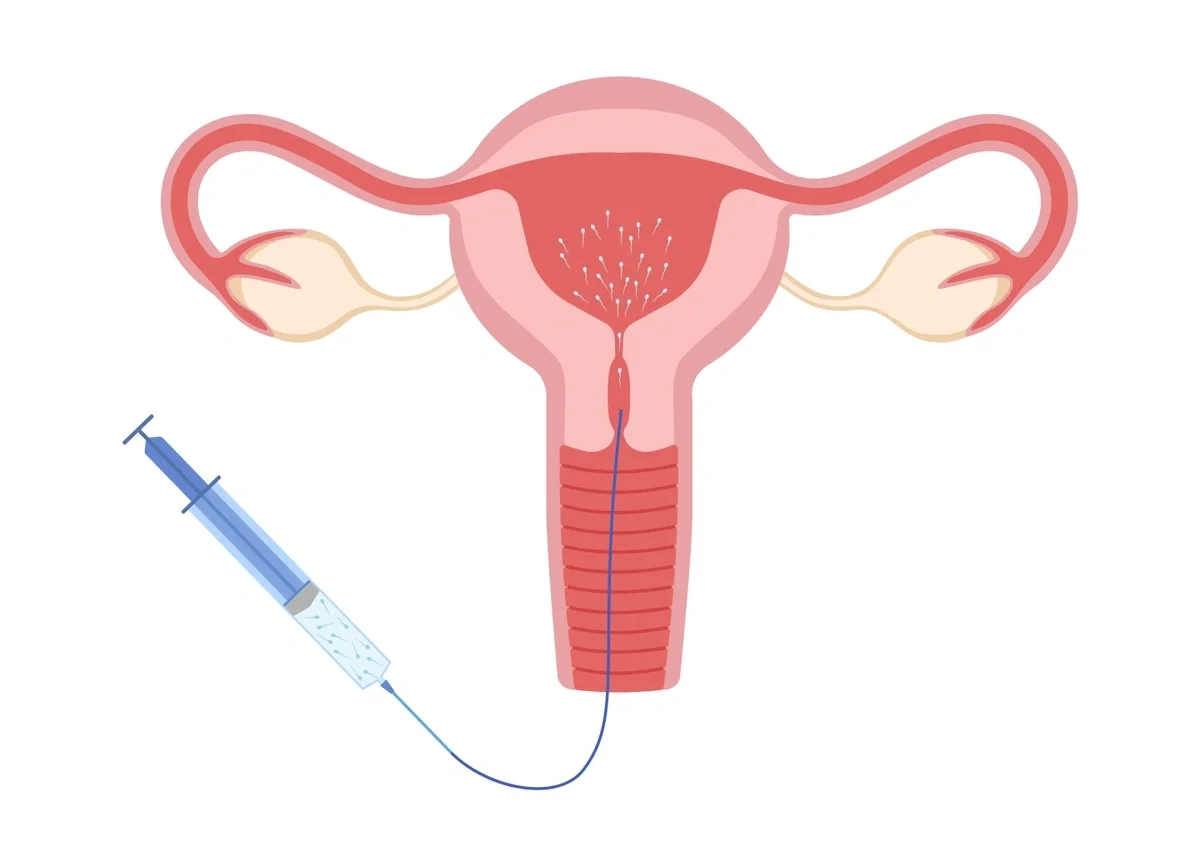
Illustration of intrauterine insemination
What Is IVF?
IVF is a more advanced treatment that involves stimulating the ovaries, retrieving eggs, fertilizing them in the laboratory, and transferring an embryo into the uterus. IVF allows for greater control over fertilization and embryo development, the option of genetic testing of embryos if desired, and higher pregnancy rates per cycle in many scenarios. While IVF is more involved, it can be the most effective path forward for certain diagnoses.
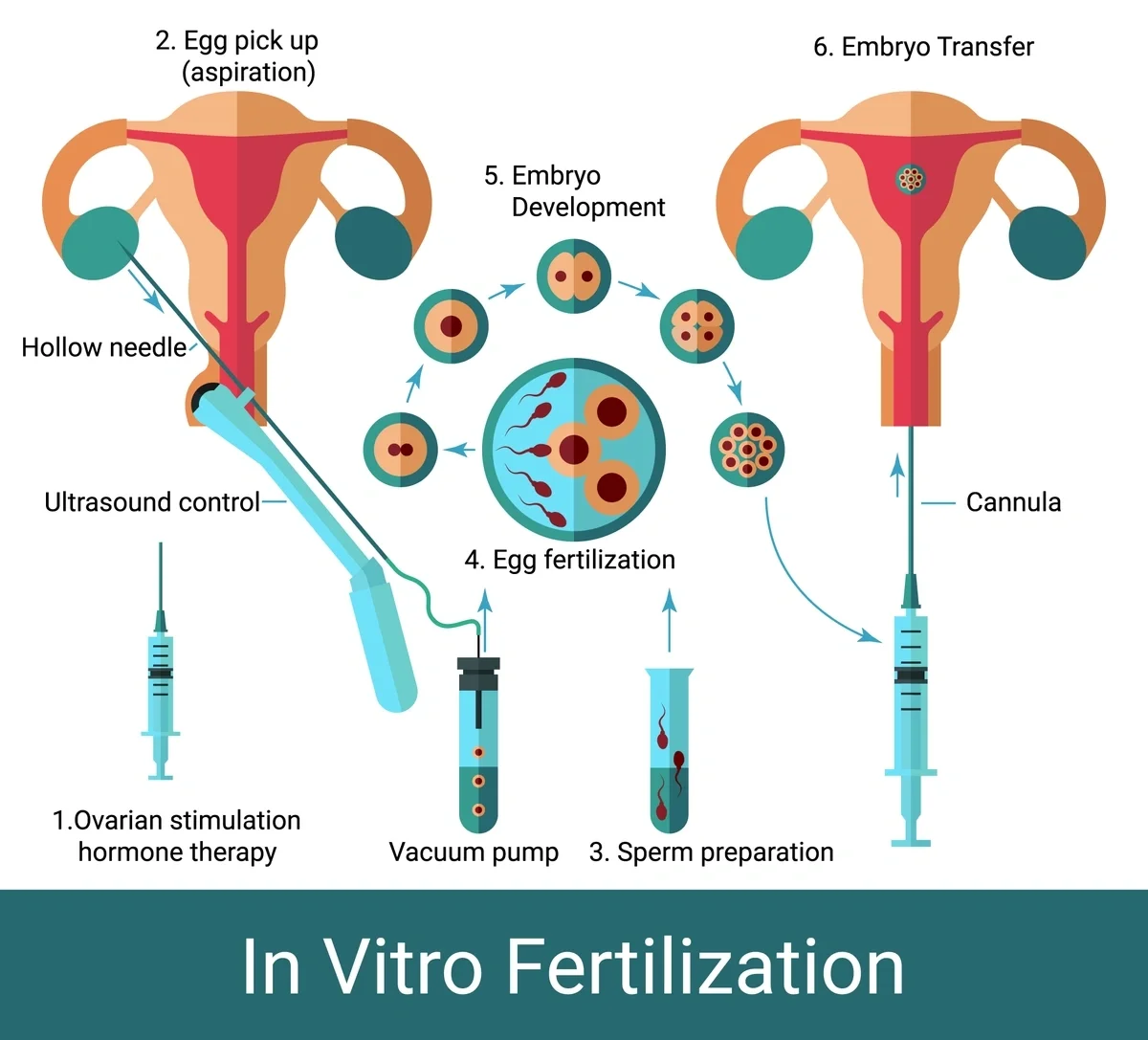
Illustration of in vitro fertilization process
When IVF Is Recommended Over IUI
Because IUI relies on fertilization happening inside the body, it isn't the most effective option for every situation. Your physician may recommend IVF over IUI in the following cases:
Blocked, damaged, or missing fallopian tubes
IUI requires open and functioning fallopian tubes, because fertilization happens inside the body. If the tubes are blocked, damaged, or absent, IVF is typically recommended—it bypasses the tubes entirely and allows the care team to evaluate uterine readiness before transfer.
Moderate to severe male factor infertility
When sperm count, movement, or shape is significantly reduced, IVF—often with ICSI (intracytoplasmic sperm injection)—may offer the most efficient path forward by supporting fertilization directly and bypassing barriers that make IUI unlikely to succeed.
Diminished ovarian reserve or advanced reproductive age
When ovarian reserve is reduced or age is a factor, time becomes especially important. IVF may be recommended because it offers higher success rates per cycle, allows for embryo creation and preservation, and uses medication protocols designed to optimize egg retrieval while eggs are still available.
Endometriosis or complex gynecologic conditions
Moderate to severe endometriosis, or other complex pelvic conditions, can make fertilization more challenging with IUI alone. IVF may provide a higher chance of success in these situations.
Unexplained infertility—especially after IUI
For patients with unexplained infertility, IUI is often tried first. But if pregnancy doesn't occur after several well-timed cycles, IVF may be the next step—it can sometimes uncover fertilization or embryo-development issues that aren't visible in earlier testing.
Recurrent pregnancy loss
IVF allows for closer monitoring of embryo development and, in some cases, genetic testing of embryos, which may be helpful for patients with a history of recurrent miscarriage.
A history of unsuccessful treatment, or the need for more insight
If you've already tried ovulation induction or IUI without success—even for a short time—your physician may recommend IVF sooner to avoid repeating treatments unlikely to yield a different result. IVF can also provide valuable diagnostic information about how eggs mature, whether fertilization occurs, and how embryos develop.
When IVF Is Recommended Right Away
Many people expect to start with the simplest options and move slowly from there, so hearing IVF recommended earlier than anticipated can feel surprising—or even overwhelming. It helps to know what that recommendation does, and doesn't, mean.
IVF is not a "last resort." One of the biggest misconceptions is that IVF is only used after everything else has failed. In reality, it's a diagnostic and treatment tool that lets physicians understand how eggs and sperm interact, observe embryo development, and control timing and conditions more precisely. For some patients—particularly when age, ovarian reserve, tubal factors, or significant male factors are involved—starting with IVF can actually reduce uncertainty and shorten the path to answers.
An early IVF recommendation is never about rushing you. It's about using the information available to give you the best chance of success with the least emotional, physical, and financial strain over time. It does not mean you have no other options, that pregnancy isn't possible without IVF, that you have to move forward immediately, or that you've failed at earlier steps. An IVF recommendation is information—not pressure.
When IUI Stops Making Sense
If you've already started with IUI, a different question eventually comes up: "Does it still make sense to keep trying?" There's no universal cutoff, but there are patterns fertility specialists watch for.
After multiple cycles haven't worked. Many clinics begin re-evaluating after three to four well-timed IUI cycles—especially when ovulation is confirmed, hormone levels look appropriate, and sperm parameters are adequate. If IUI hasn't succeeded under optimized conditions, continuing often brings diminishing returns. At that point, the question shifts from effort to efficiency.
When age or ovarian reserve makes time critical. For patients in their late 30s or 40s, or those with diminished ovarian reserve or lower AMH, spending many months on IUI can reduce the opportunity to pursue treatments with higher success rates per cycle. Reassessing sooner isn't because IUI is "wrong"—it's because each opportunity counts.
When male factor is more significant, or several factors combine. Consistently low sperm counts or poor motility can mean IUI won't meaningfully improve fertilization chances, making IVF (or IVF with ICSI) the stronger option. IUI also works best when one primary issue is being addressed; when age, ovarian reserve, and sperm parameters stack together, it may no longer offer enough of an advantage to continue.
Does moving on from IUI mean it "failed"? No. IUI does its job by helping clarify what does and doesn't move the needle. Every cycle provides information, and deciding to move on is usually the result of learning from those cycles—not abandoning them.
Treatment Plans Can Change Over Time
Fertility care is dynamic. Some patients move from IUI to IVF based on how treatment responds; others achieve success without ever needing IVF. Recommendations may evolve as new information becomes available. What matters most is that your plan reflects your unique fertility picture, aligns with your goals and comfort level, and is guided by clear communication and shared decision-making.
The Emotional Side—and Staying in Control
Hearing "IVF"—whether right away or after IUI—can bring up many emotions: fear, grief, relief, uncertainty, or all at once. That reaction is completely normal. Letting go of IUI, in particular, can feel like losing a simpler option or accepting that the journey may be longer. Those feelings are valid, and taking time to process them is part of thoughtful, patient-centered care.
At IFI, you're encouraged to ask questions, take time to think through your options, and revisit the conversation as many times as needed. Decisions are made with you, not for you—and no matter when IVF enters the conversation, you are always in control of what comes next.
Questions you may want to ask your doctor
-
Why is this treatment being recommended now?
-
What alternatives exist, and how do their success rates compare?
-
What happens if we wait, or try another cycle?
-
What would IVF help us learn about my fertility?
-
How does this fit into our long-term goals?
Frequently Asked Questions
How many IUIs should I try before moving to IVF? There's no universal number, but many clinics begin re-evaluating after three to four well-timed IUI cycles under optimized conditions. Your ideal number depends on your age, diagnosis, and how your body has responded.
Is IVF a last resort? No. IVF is a diagnostic and treatment tool, not a final option after everything else fails. For some diagnoses—such as blocked tubes, significant male factor, or diminished ovarian reserve—it may be the most effective first step.
Why would my doctor recommend IVF before IUI? An early IVF recommendation usually reflects time sensitivity (age or ovarian reserve), a diagnosis where IUI is unlikely to succeed (such as blocked tubes or significant male factor), or a desire to avoid repeating treatments with lower odds. It's about maximizing your opportunity, not rushing you.
Is IUI or IVF more successful? IVF generally has higher pregnancy rates per cycle, but "more successful" depends on your specific situation. For patients with mild or no identified issues, IUI can be very effective and is less invasive and lower cost. Your physician can walk through your likely chances with each.
Does switching from IUI to IVF mean IUI failed? No. Each IUI cycle provides information about what's working. Moving to IVF is usually the result of learning from those cycles and choosing the approach most likely to help going forward.
The Bottom Line
Choosing between IUI and IVF isn't about taking the "easy" or the "aggressive" route—it's about choosing the most appropriate and effective option for you. Your physician will walk you through your test results, your diagnosis if one exists, and your chances of success with each treatment, so you can move forward with clarity and confidence.
If you have questions about whether IUI or IVF is right for your situation, request a consultation with the team at Indiana Fertility Institute for personalized guidance and a plan designed just for you.