


When IUI Stops Making Sense: Understanding When It’s Time to Reconsider the Plan
Many patients begin fertility treatment with optimism around intrauterine insemination (IUI). It’s less invasive than IVF, often less expensive, and for some patients, it’s an effective first step.
But sometimes, after multiple cycles or new information, the question comes up: “Does it still make sense to keep trying IUI?”
If you’ve found yourself having that conversation—or feeling stuck between hope and uncertainty—you’re not alone. Below, we explain when IUI may no longer be the most effective option, and how fertility specialists decide when it’s time to reassess the plan.
First, what IUI does well
IUI is designed to help when timing or sperm placement is the main challenge. It can be very effective in cases such as:
-
Ovulation irregularities that respond well to medication
-
Mild male factor issues
-
Cervical or timing concerns
-
Shorter durations of infertility
For the right patients, IUI can be a thoughtful and appropriate starting point.
So, when does IUI stop making sense?
There’s no universal cutoff—but there are patterns fertility specialists look for when deciding whether continuing IUI is likely to be beneficial.
When multiple IUI cycles haven’t worked
Many fertility clinics begin re‑evaluating after 3–4 well‑timed IUI cycles, especially when:
-
Ovulation is confirmed
-
Hormone levels look appropriate
-
Sperm parameters are adequate
If IUI hasn’t resulted in pregnancy under optimized conditions, continuing indefinitely often offers diminishing returns, even though it can feel emotionally hard to move on.
At this point, the question becomes less about effort—and more about efficiency.
When age becomes a key factor
Age plays a significant role in how time‑sensitive fertility care becomes.
For patients in their late 30s or 40s, spending many months on IUI may reduce the opportunity to pursue treatments with higher success rates per cycle. In these cases, doctors may recommend reassessing sooner—not because IUI is “wrong,” but because time matters.
When ovarian reserve is lower
In patients diagnosed with diminished ovarian reserve (DOR) or lower AMH levels:
-
Fewer eggs are available each cycle
-
Each opportunity counts
If ovulation induction with IUI is unlikely to significantly improve the odds, IVF may offer a more strategic way to maximize the chance of success.
When male factor infertility is more significant
IUI relies on having enough healthy, motile sperm reach the egg.
When semen analysis shows:
-
Consistently low sperm counts
-
Poor motility
-
Or low total motile sperm numbers
IUI may not meaningfully improve fertilization chances. In these situations, in vitro fertilization (IVF)—or IVF with intracytoplasmic sperm injection (ICSI)—can bypass barriers that IUI cannot.
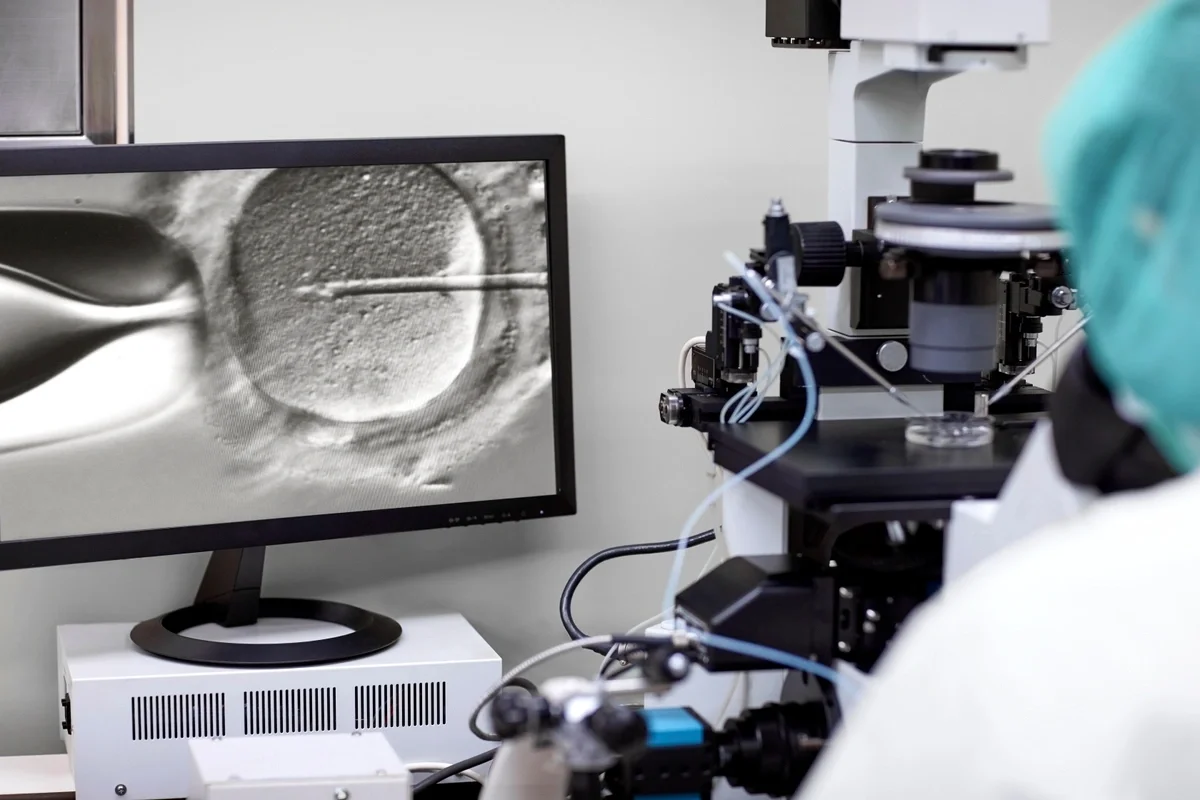
Image depicting intracytoplasmic sperm injection
When there are multiple contributing factors
IUI tends to work best when one primary issue is being addressed.
When several factors are present—such as age, ovarian reserve concerns, and sperm parameters together—IUI may no longer offer a strong enough advantage to justify continuing.
When “everything looks normal,” but pregnancy isn’t happening
This can be one of the most frustrating scenarios.
If testing is largely normal, cycles are regular, and IUIs are well‑timed—but pregnancy still hasn’t occurred—doctors may recommend moving on, not because something is “wrong,” but because:
-
Subtle factors aren’t always measurable
-
IUI success rates plateau
-
IVF offers more insight and control
Sometimes, escalation isn’t about a new diagnosis—it’s about changing the approach.
Does moving on from IUI mean it “failed”?
No.
IUI doesn’t fail by not working—it does its job by helping clarify what does and doesn’t move the needle.
Every cycle provides information. Deciding to move on is often the result of learning from those cycles, not abandoning them.
The emotional side of this decision
Letting go of IUI can feel like:
-
Losing a simpler option
-
Accepting that the journey may be longer
-
Facing a more complex treatment path
Those feelings are completely valid. Taking time to process them is part of thoughtful, patient‑centered care—not hesitation or weakness.
Closing Thoughts
When IUI stops making sense, it’s not because hope is gone—it’s because the focus shifts to what gives you the strongest chance moving forward.
Reassessing treatment doesn’t mean starting over. It means using what you’ve learned so far to make decisions that are more aligned with your biology, timeline, and goals.
If you’re unsure whether continuing IUI still makes sense for you, that conversation itself is a meaningful next step.