

What Is ICSI (Intracytoplasmic Sperm Injection)?
If you're preparing for IVF, you may have come across the term ICSI — short for intracytoplasmic sperm injection. It's one of the most important advances in fertility care, and for some patients it makes the difference between fertilization happening or not. But it's also become one of the most overused procedures in IVF, so it's worth understanding what it actually does, when it genuinely helps, and when it may not add anything at all.
Here's a clear, honest look at ICSI — so you can have a more informed conversation with your care team.
What is ICSI, in plain terms?
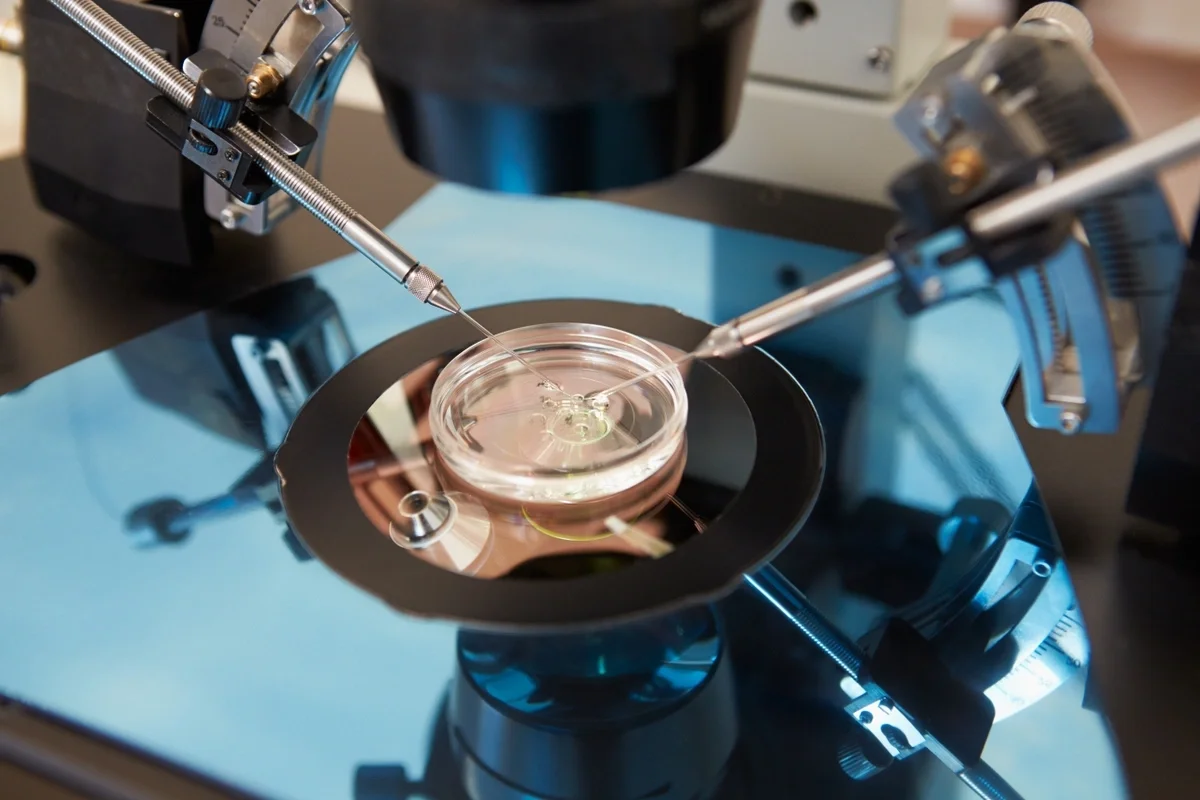
ICSI is a laboratory technique used within an IVF cycle to fertilize eggs. In ICSI, an embryologist uses a fine glass needle to inject a single sperm directly into a single mature egg.
That's the key difference from conventional IVF. In conventional IVF, eggs and a prepared sample of many thousands of sperm are placed together in a dish, and fertilization happens on its own when a sperm penetrates an egg. ICSI skips that step by placing the sperm inside the egg directly — which is why it's so valuable when sperm can't easily reach or penetrate the egg on their own.
Everything else about the IVF cycle is the same. ICSI only changes how fertilization is achieved; it doesn't change the stimulation, the egg retrieval, or how embryos are grown and transferred afterward. Our overview of what happens in the IVF lab walks through the full process.
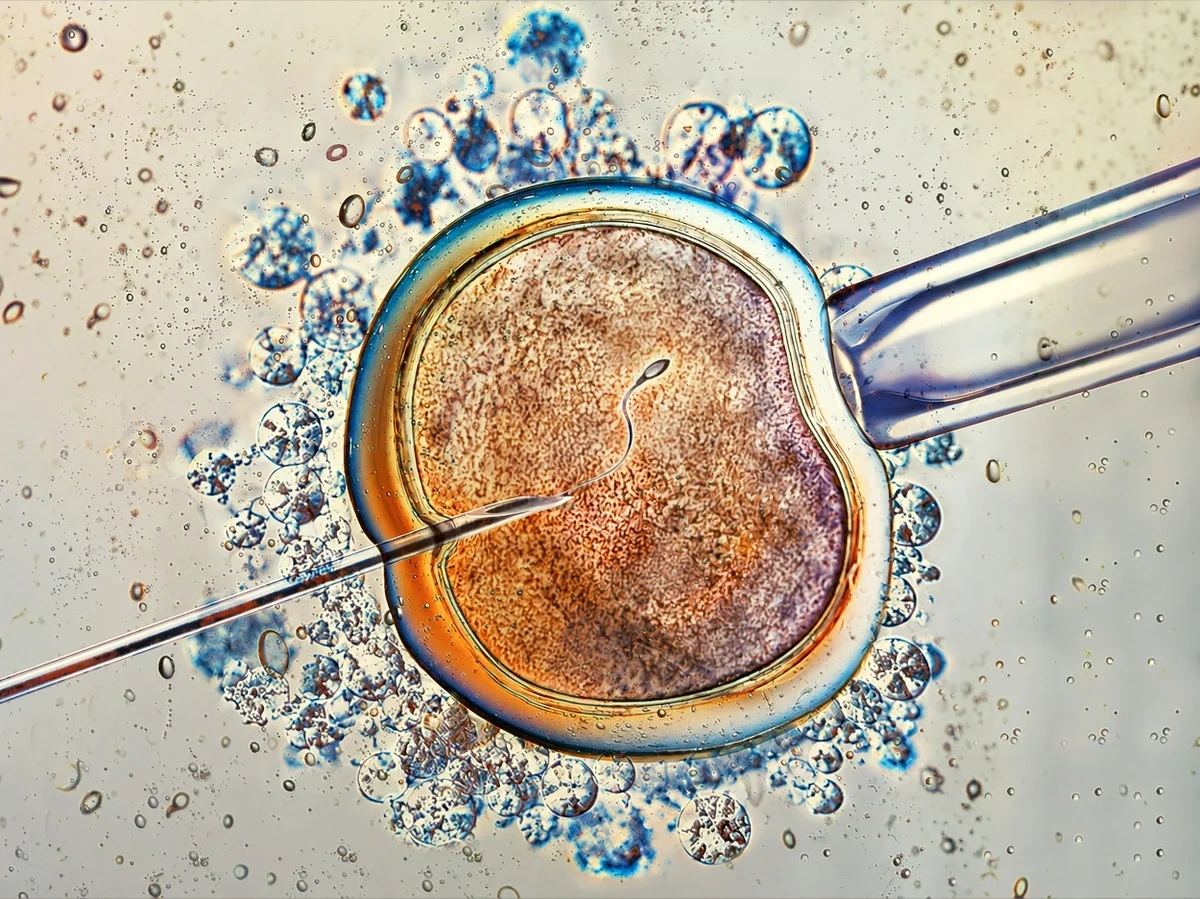
Image of ICSI procedure
When ICSI is genuinely helpful
ICSI was developed to solve a specific problem — sperm that can't fertilize an egg on their own — and that's still where it shines. Leading guidelines support ICSI in situations such as:
-
Male factor infertility — significantly low sperm count, poor movement (motility), or abnormal shape (morphology). This is the primary, well-established use of ICSI. If a semen analysis points to male factor, ICSI is often the right call.
-
Surgically retrieved or very limited sperm — for example, sperm obtained through a procedure when there is none in the ejaculate, or a very small number of frozen sperm, where every sperm counts.
-
Prior fertilization failure — if a previous conventional IVF cycle resulted in poor or no fertilization, ICSI can help in the next cycle.
-
Using previously frozen (cryopreserved) eggs — the freezing and thawing process can make the egg's outer layer harder to penetrate, so ICSI is often used.
-
Certain genetic testing (PGT-M) — when testing embryos for a specific inherited single-gene condition, ICSI helps ensure stray sperm don't contaminate and skew the test result.
In these situations, ICSI is a powerful, appropriate tool — and a good clinic will recommend it precisely when it's needed.
When ICSI may not add any benefit
Here's the part that surprises many patients. Over the past few decades, ICSI use has expanded far beyond male factor infertility — to the point where it's now used in the majority of IVF cycles in the U.S., including many without any sperm problem at all. Yet the evidence has not kept pace with that trend.
According to the American Society for Reproductive Medicine's most current guidance, for patients without male factor infertility, ICSI is not recommended for:
-
Unexplained infertility
-
Low egg (oocyte) yield
-
Diminished ovarian reserve
-
Advanced maternal age
-
Routine chromosomal screening of embryos (PGT-A)
In these scenarios, studies show ICSI does not improve live birth rates compared with conventional IVF — and because it's an added laboratory procedure, it typically adds cost. In short: when there's no sperm-related reason for it, more technology isn't better. For PGT-A specifically, ICSI doesn't improve the number of chromosomally normal embryos or the live birth rate.
This is why it's completely reasonable to ask your physician a direct question: "Do I actually need ICSI, and what's the reason?" A thoughtful, evidence-based clinic welcomes that conversation.
What ICSI does — and doesn't — do
It helps to be clear about ICSI's limits, so expectations stay realistic:
-
ICSI addresses fertilization — not egg quality or embryo genetics. It helps a sperm fertilize an egg; it does not make eggs "better," and it does not improve an embryo's chromosomal normality.
-
ICSI doesn't guarantee fertilization. Even with ICSI, not every injected egg will fertilize — typically a majority do, but not all.
-
ICSI doesn't by itself raise your odds of a baby unless a fertilization barrier (like male factor) was the obstacle in the first place.
Thinking of ICSI as a targeted fix for a specific problem — rather than a general upgrade to IVF — is the most accurate way to understand it.
Is ICSI safe?
ICSI has been used worldwide for decades and is considered safe. The large majority of babies born after ICSI are healthy.
For full transparency: some studies in male-factor populations have noted a small increase in certain birth differences among ICSI-conceived children. Importantly, researchers believe much of this may relate to the underlying infertility itself rather than the ICSI procedure — and the safety of ICSI specifically for non–male-factor use hasn't been thoroughly studied, which is one more reason not to use it when it isn't needed. The absolute risk remains low, and your physician can walk you through what the evidence means for your situation.
Frequently asked questions
What is ICSI? ICSI (intracytoplasmic sperm injection) is a technique used during IVF in which a single sperm is injected directly into a single egg to achieve fertilization. It's most valuable when sperm can't easily fertilize an egg on their own.
How is ICSI different from regular IVF? In conventional IVF, eggs and many sperm are combined in a dish and fertilization happens naturally. In ICSI, an embryologist injects one sperm into each mature egg. ICSI only changes the fertilization step — the rest of the IVF cycle is the same.
Do I need ICSI? ICSI is clearly beneficial for male factor infertility and a few specific situations (such as prior fertilization failure, surgically retrieved sperm, frozen eggs, or single-gene PGT-M testing). If there's no sperm-related reason, guidelines generally don't recommend it. Ask your physician why it is — or isn't — being recommended for you.
Does ICSI improve IVF success rates? Only when a fertilization barrier like male factor is present. For couples without male factor infertility, ICSI has not been shown to improve live birth rates compared with conventional IVF, and it adds cost.
Is ICSI safe? Yes, ICSI is widely used and considered safe, and most babies born after ICSI are healthy. Some studies note a small increase in certain birth differences, which may be linked to underlying infertility rather than the procedure itself.
The bottom line
ICSI is a remarkable tool that helps many couples — especially those facing male factor infertility — achieve a pregnancy they might not have otherwise. But it isn't a universal upgrade to IVF, and using it when it isn't needed adds cost without adding benefit. The best approach is individualized: ICSI when there's a clear reason for it, conventional IVF when there isn't.
If you'd like to understand whether ICSI makes sense for your situation, request a consultation with the team at Indiana Fertility Institute. We'll look at your complete picture — including any male factor considerations — and recommend only what's genuinely likely to help.